Anzac Day's changing meaning
The meaning of Anzac Day has changed a lot in over a century, but its continued popularity shows the appeal of community and connection in a fractured and changing world.

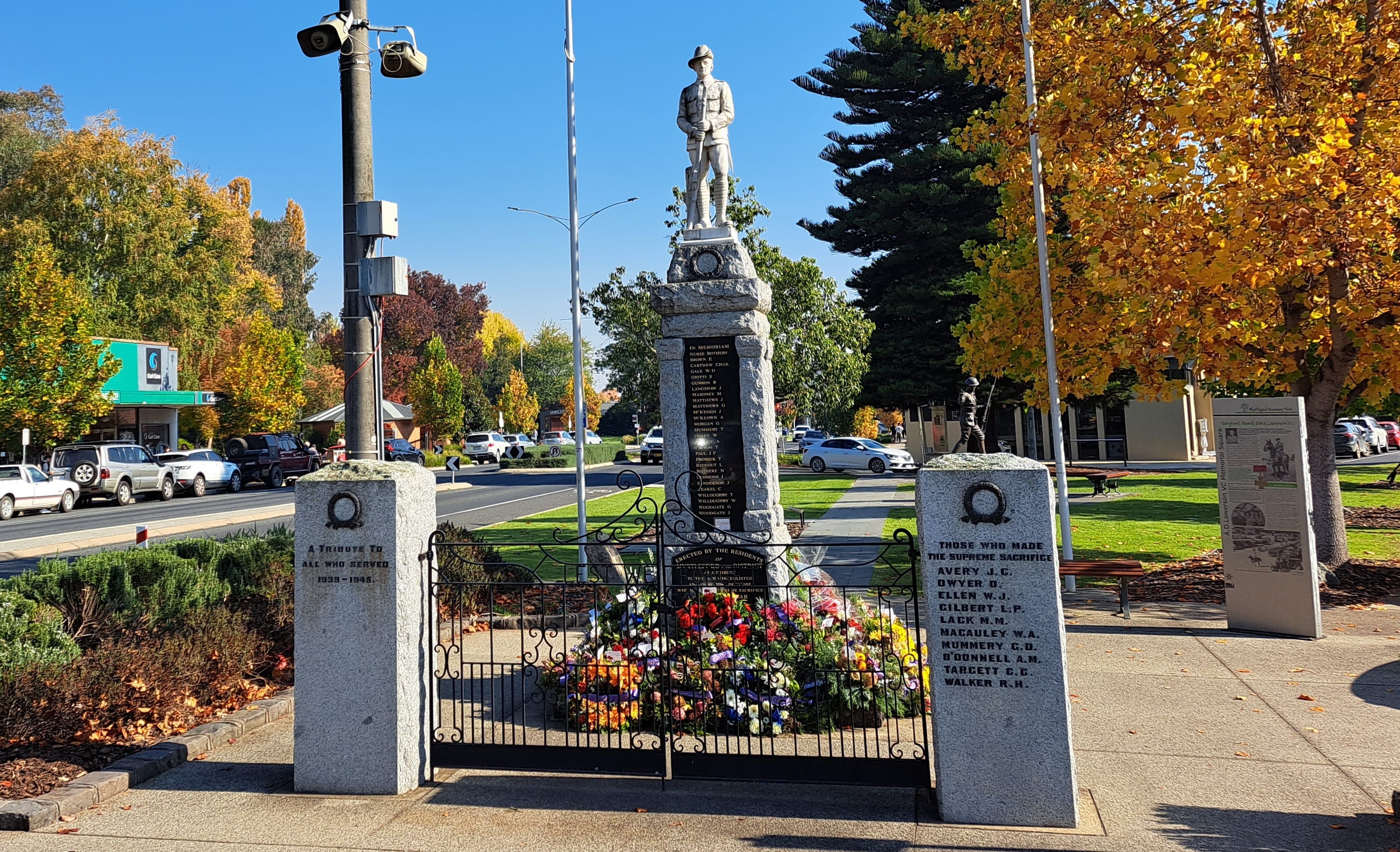
Many countries have a day to honour their living veterans and commemorate their war dead. In Australia and New Zealand, unusually, this falls on the anniversary of the beginning of a fairly unimportant and ultimately unsuccessful military campaign. Like almost all of Australia’s national symbols, Anzac Day has been deconstructed, analysed and criticised. To some, including some veterans, it is too closely tied to bloodshed and empire to have personal meaning. Others question why the Gallipoli landings, far from Australia and in pursuit of a strategic goal unrelated to the defence of the Australian continent, should have central importance to our national identity. “Dragged into service by the imperial government in an ill-conceived and poorly executed campaign, we were cut to ribbons and dispatched – and none of it in the defence of Australia” said former Prime Minister Paul Keating of the Gallipoli landings in 2008.
It is impossible understand the original meaning and significance of Anzac Day without understanding the mindset of Australians in the first decades of the twentieth century. And it is also impossible to understand the continuing significance of Anzac Day without understanding the gap it fills in national life in the twenty-first. Some of our traditions have died out, but Anzac Day has evolved alongside our evolving national identity.
Origins
When the First World War broke out in the summer of 1914, the Ottoman Turkish Empire was initially neutral. Courted by Germany and tempted by the opportunity to attack its old enemy, Russia, the Ottoman Government joined the War on the side of the Central Powers in October with a dramatic attack on Russian ports on the Black Sea. Türkiye may have been the “Sick Man of Europe”, but having it in the War on the side of Germany presented a major problem for the Western Allies, France and the United Kingdom. Germany had already closed one sea route to their ally, Russia, though the Baltic Sea. The Ottoman Empire now closed the other sea route through the Dardanelles, the narrow waterway separating Europe and Asia.
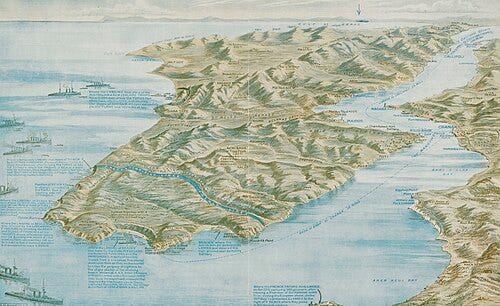
On 18 March 1915, an Allied fleet tried to force its way through the straits but was repelled by mines and Turkish artillery. Having failed to open the straits by sea, the Allies then tried to open them by land. On 25 April, British, French, and British dominion troops landed on the Gallipoli Peninsula, on the European side of the straits. Their goal was to capture the Ottoman positions, allowing an Allied naval force to make its way through the straits. If everything went well, the Allies could threaten the Ottoman, Constantinople, and force the Ottoman Empire to withdraw from the War.
Of course, everything did not go well. The rugged, rocky peninsula was too easily defended. The Allies were bogged down, and after eight months of hard campaigning, forced to withdraw, leaving their buried dead behind. In 1918, the Allies would go on to defeat the Ottoman Empire, but not via Gallipoli.
Commemoration
Thousands of British and French troops fought at Gallipoli, but the campaign had little resonance in those countries. In Australia and New Zealand, however, it took on a mythological significance almost immediately. The first Anzac Day commemorations were held on 25 April 1916, and by the 1920s, the Day was a fixture in the national calendar.
“At Anzac, we proved ourselves a nation, with a heart and soul, and a people worthy to endure on this earth” Prime Minister Stanley Melbourne Bruce told the assembled crowd in Melbourne on the tenth anniversary of the Anzac landings in 1925. “As we celebrate today, we celebrate the first great occasion on which Australia’s citizen soldiers, born in a land of freedom, performed great feats of arms and gained the admiration of the whole world, and proved that we were not unworthy”. Bruce was himself a Gallipoli veteran, although he had been there in a British rather than an Australian unit.
Bruce’s speech gives a hint of why Anzac Day became so important so quickly. Australia’s Indigenous prehistory was of anthropological interest but of little national significance to Australians in the 1920s, who viewed Aboriginal people as being fundamentally different and apart from themselves. The stigma of Australia’s convict origins was just beneath the surface, inseparable from the story of building a colonial society in Australia but too shameful to mention. At Federation in 1901, the nation was something of a blank slate, and the Anzac landings provided something to write on it. The early twentieth century was a time when national identity was closely tied to military glory, and Australians would have been raised on a diet of accounts of British military heroism, from Nelson’s death at Trafalgar to the Charge of the Light Brigade. Anzac gave them a heroic story of their own. They were no longer the sons and daughters of convicts trying to build an imitation of British society in a savage land, they were military heroes who had crossed thousands of miles of ocean to come to the mother county’s aid in her hour of need. They had, in Bruce’s words, proved themselves worthy. As Banjo Paterson wrote in “We’re all Australians now”:
With all our petty quarrels done,
Dissensions overthrown,
We have, through what you boys have done,
A history of our own.
These original meanings of forging a national identity through blood and conflict and loyalty to the Empire ran through Anzac Day commemorations in the early decades. An editorial in the Darling Downs Gazette in 1920 praised the Anzacs for being willing to endure sacrifice for “the protection of their homes, the liberty of their country and the unity of the Empire”.
Changing meaning
By the 1960s, however, the winds of change were blowing, and the old nationalism based in British consanguinity and imperial loyalty was wilting. In his pivotal work on Australia in the that decade, The Lucky Country, Donald Horne described Anzac Day as “ordinary veterans in very ordinary clothes march down the streets (many out of step), go through a brief ceremony, and then many of them get drunk”. Anzac Day in his view was more tribal than patriotic: “There are themes of death and sacrifice: but the appeal of Anzac Day is as an expression of the commonness of man (even death is a leveller), of the necessity of sticking together in adversity”. It was “unpretentious and comradely”, a day for the steadily-declining numbers of veterans. It ceased to have much relevance for younger Australians, and became a topic of criticism in artistic and literary circles.
By the turn of the twenty-first century, very few First World War veterans were left and the ranks of Second World War veterans were thinning. Fewer and fewer Australians had personal experience of armed conflict. It was around this time that Anzac Day experienced something of a revival. The 9/11 attacks and Bali Bombings, and the general collapse of 1990s-era optimism certainly played a role. We were reminded that the peaceful triumph of democracy was not inevitable and armed conflict was inescapable. But it also wouldn’t be the first commemoration to take on a new meaning as the events it commemorated slid out of living memory.
It’s fair to say that, in 2020s, Anzac Day no longer has all that much to do with the Gallipoli landings. We no longer glorify conflict, and the idea of Empire has no meaning to most Australians. But thousands of us – me included – continue to attend dawn ceremonies and other Anzac Day commemorations.
In a society which is increasingly atomised, globalised and online, people often feel the need for community and continuity. Anzac Day provides this. We can feel a collective sense a gratitude that someone who died decades before they were born was willing to risk their life so that they could live in a prosperous and democratic country. It is one of those things which makes us a nation rather than twenty-something-million people who happen to be living in the same continent.
National symbols and traditions can appear by accident, centred on people and events which were, in the big scheme of things, not particularly important. The storming of the Bastille freed only seven prisoners. America’s national anthem is about the bombardment of a fort in the indecisive War of 1812. The Canadians commemorate the Battle of Vimy Ridge in the First World War, which was a Canadian victory but far from the most significant Canadian battle of the First World War. Anzac Day is not unusual in that regard. Regardless of its origins, it does fill a need – to recognise those who bring us security in an insecure world, to feel a connection to those who came before, and to experience being a member of a community. These are no small things, even in the 2020s. It’s meaning will remain contested, but it is unlikely to lose its significance.